> For the complete documentation index, see [llms.txt](https://help.listly.io/llms.txt). Markdown versions of documentation pages are available by appending `.md` to page URLs; this page is available as [Markdown](https://help.listly.io/getting-started/extension-features/table-data.md).
# Table Data
## What is Table Data?
A feature you can usefully use when extracting data that 'looks like a table'.
{% hint style="info" %}
**Quick Start**
➡️ Extract with TABLE DATA off ➡️ If 'it looks like a table' but data doesn't extract properly, re-extract with TABLE DATA toggle on
{% endhint %}
***
Left is OFF, right is ON. Use the default OFF state, and **when you think 'it looks like a table but data doesn't extract well'**, try extracting with it **ON**.
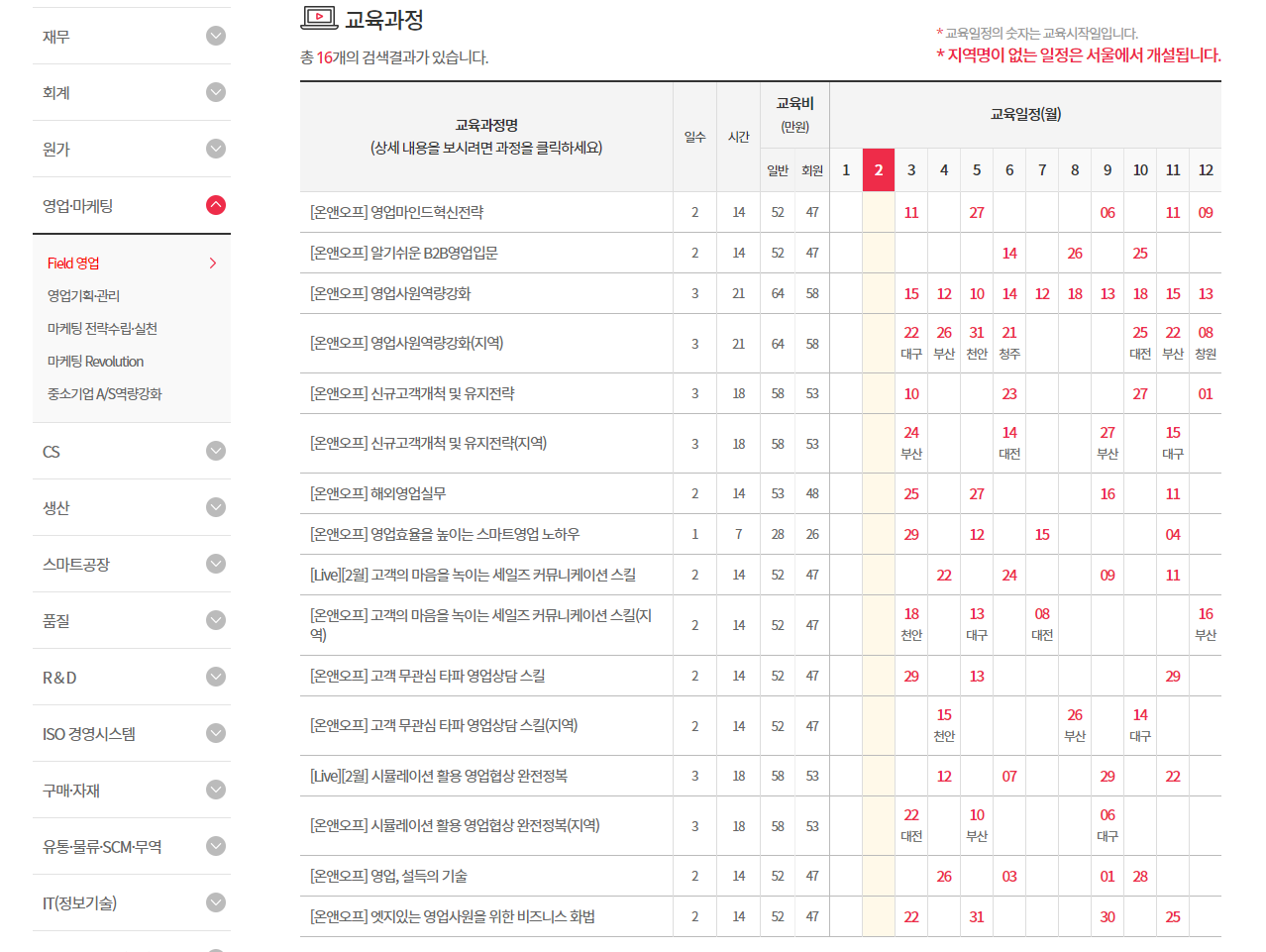
Useful for extracting data from web pages that look like tables (tables), like this site:
Check the extraction difference between option off and on in the How to use it section below.
***
## How to Use
{% stepper %}
{% step %}
### TABLE DATA - OFF
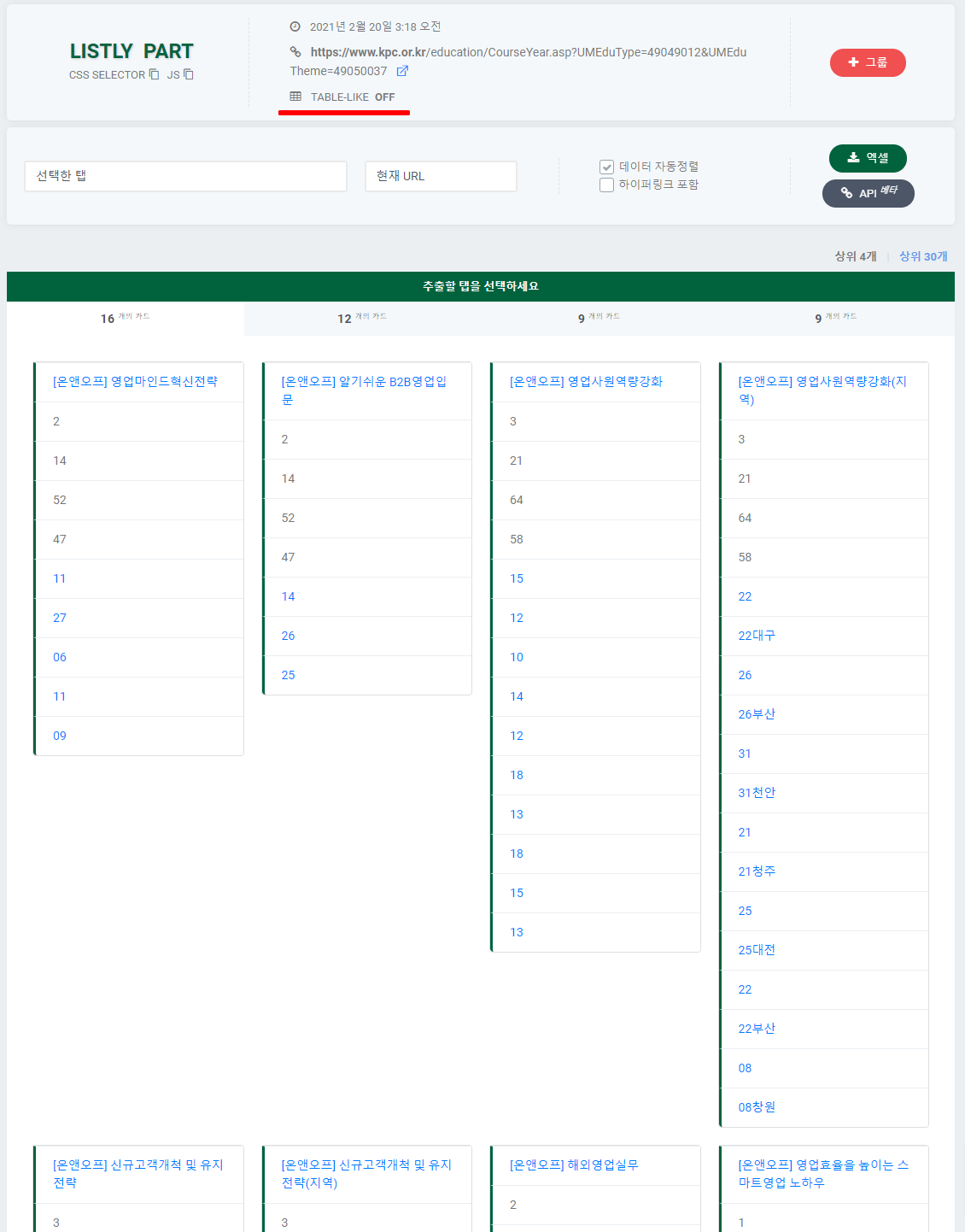
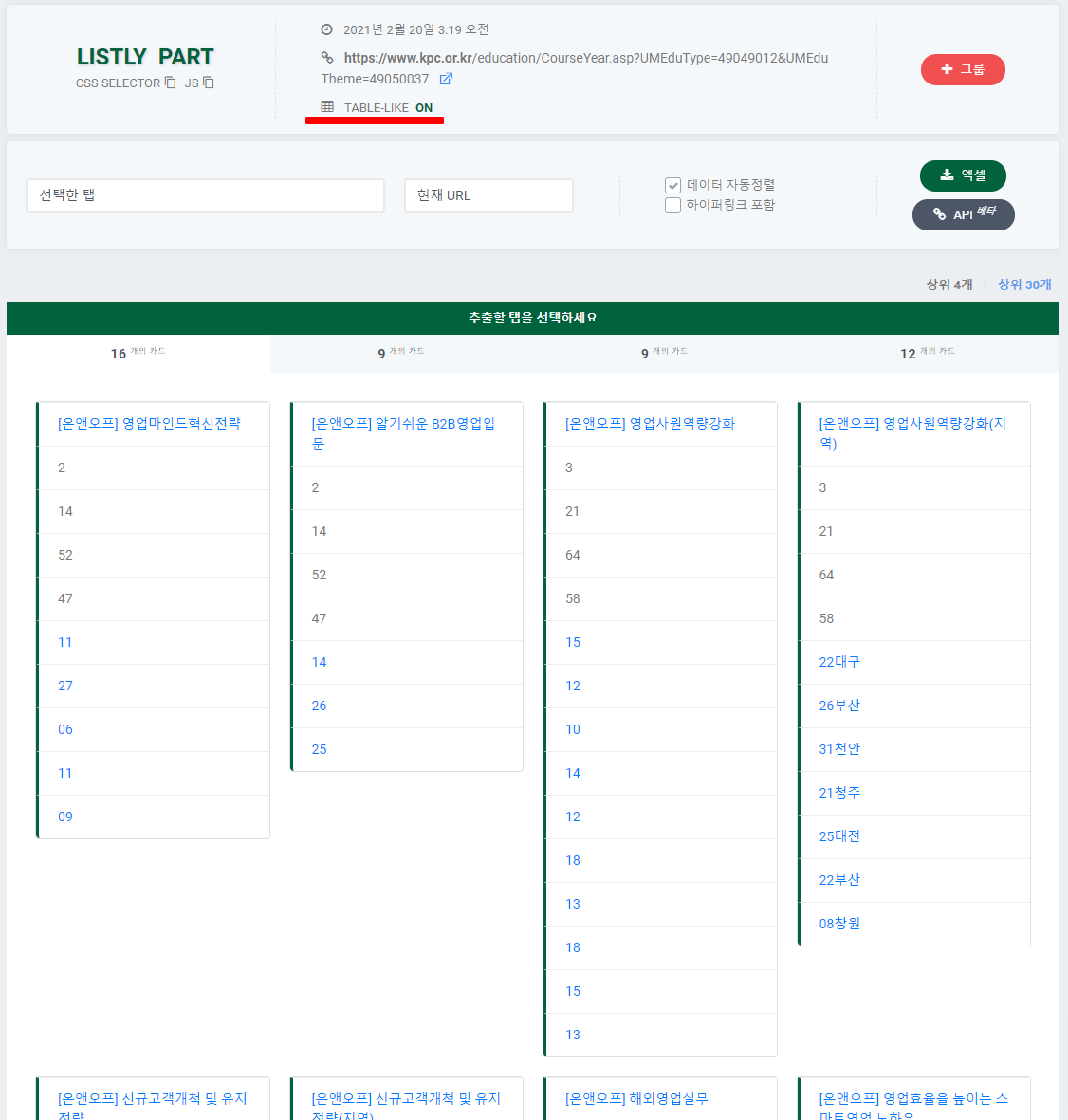
When extracting data, the **red underlined** area shows whether TABLE-LIKE is applied.
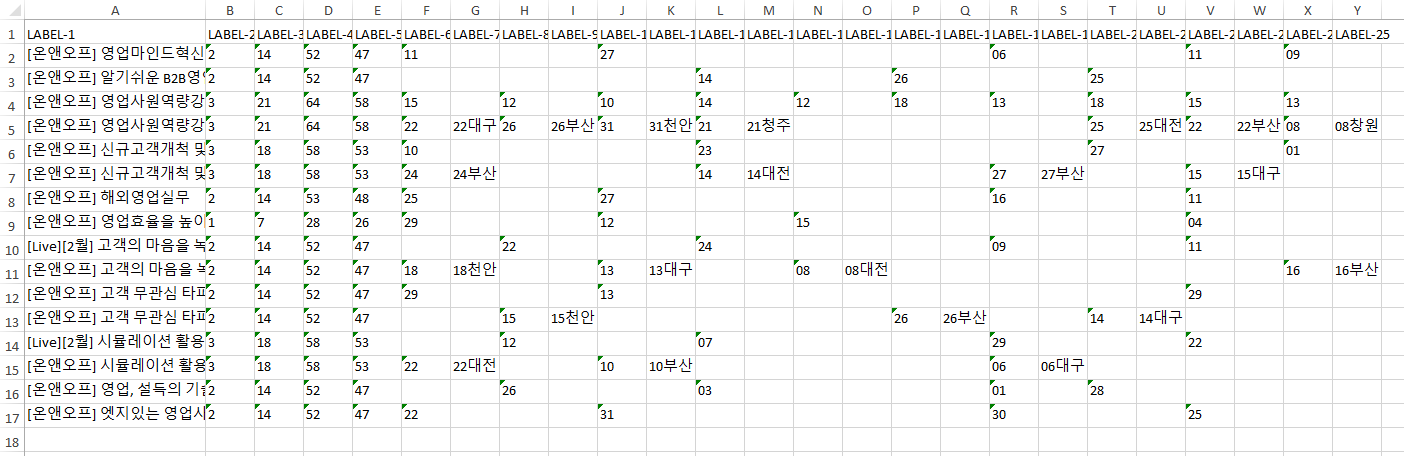
When this option is off (OFF), downloading the Excel file looks like this:
**Original page vs. extracted data comparison**
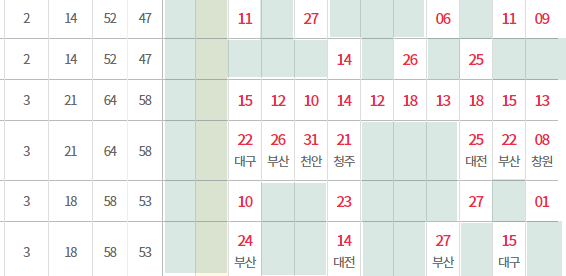
Let's compare the original page with part of the extracted data.
But the values look a bit off. Some strings were partially duplicated in extraction (31, 31Cheonan, 21, 21Cheongju, etc.) and the number of blank spaces between columns differs. Comparing the original page's light green blank areas with the Excel file shows **the extracted data alignment differs from the original at a glance**.
{% hint style="success" %}
**In this case, turn IS TABLE-LIKE to** **`ON`** **and extract again**.
{% endhint %}
{% endstep %}
{% step %}
### TABLE DATA - ON
Let's extract from the same website with TABLE-LIKE option on.
The **red underlined** area shows TABLE-LIKE is applied.
**Original page vs. extracted data comparison**
Let's compare the original page with the extracted data from the same area as in section 1.
When extracting data with TABLE-LIKE option enabled, the blank areas marked in light green on the original page **match exactly with the extracted data's blank areas and there's no duplicated text**.
{% hint style="info" %}
Observing Listly users, only about 10% deal with tabular data. So in most cases you don't need the TABLE-LIKE option. Use it in the default OFF state, and only turn it ON when you judge 'it looks like a table but doesn't extract well'.
{% endhint %}
{% endstep %}
{% endstepper %}
---
# Agent Instructions
This documentation is published with GitBook. GitBook is the documentation platform designed so that both humans and AI agents can read, navigate, and reason over technical content effectively. Learn more at gitbook.com.
## Querying This Documentation
If you need additional information that is not directly available in this page, you can query the documentation dynamically by asking a question.
Perform an HTTP GET request on the current page URL with the `ask` query parameter, and the optional `goal` query parameter:
```
GET https://help.listly.io/getting-started/extension-features/table-data.md?ask=&goal=
```
`ask` is the immediate question: it should be specific, self-contained, and written in natural language.
`goal` is optional and describes the broader end goal you are ultimately trying to accomplish on behalf of the user. GitBook uses it to tailor the answer towards what is most useful for that goal.
The response will contain a direct answer to the question and relevant excerpts and sources from the documentation.
Use this mechanism when the answer is not explicitly present in the current page, you need clarification or additional context, or you want to retrieve related documentation sections.